

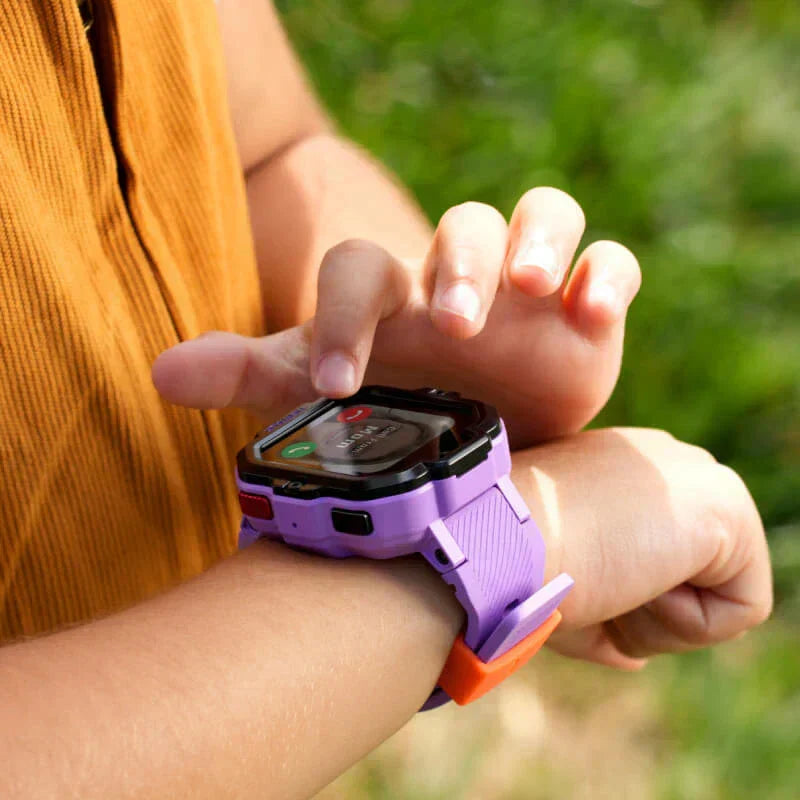
The Answer: Kids Smartwatches with Dedicated Emergency Features
The safest device for children to contact parents during emergencies without a smartphone is a kids smartwatch with built-in cellular connectivity, SOS calling, and GPS tracking. Unlike smartphones, these wearable devices eliminate exposure to social media, internet browsing, and unsupervised app downloads while maintaining critical communication capabilities. A properly designed kids smartwatch provides instant access to trusted contacts through one-touch calling, automatic location sharing during emergencies, and parental oversight of all device functions.
For parents seeking peace of mind without the risks associated with giving children unrestricted phone access, smartwatches designed specifically for kids ages 3-12 offer the optimal balance. These devices stay securely on a child's wrist, making them harder to lose than a phone, and they function as standalone communication tools without requiring a paired smartphone. The key differentiator lies in purpose-built emergency features: quick-dial SOS buttons, automatic parent notifications when 911 is called, real-time GPS location sharing, and the ability for parents to remotely monitor their child's surroundings if needed.
This approach addresses the core concern most parents face: how to stay connected with children during genuine emergencies while avoiding the developmental and safety risks that come with premature smartphone ownership. The solution requires three essential components working together: reliable cellular connectivity for calls in any location, GPS tracking to pinpoint a child's exact whereabouts during a crisis, and comprehensive parental controls that prevent misuse while maintaining emergency access.
Essential Features of Emergency Communication Devices for Kids
One-Touch Emergency Calling
The most critical feature of any child emergency device is the ability to reach help instantly without navigating complex menus or remembering phone numbers. Dedicated SOS buttons allow children to contact parents or emergency services with a single press, even under stress or in situations where they cannot speak freely. This functionality proves invaluable when seconds matter, such as when a child becomes separated from their group, faces a medical emergency, or encounters an unsafe situation.
Effective emergency calling systems include quick-dial capabilities for both parents and 911, ensuring children can reach the appropriate help regardless of the situation. The device should automatically notify all designated guardians when an emergency call is placed, providing them with the child's location and the nature of the call. This multi-layered notification system ensures that even if one parent is unavailable, others in the family network receive immediate alerts.
Beyond the technical capability to make calls, the interface design matters significantly. Children as young as three need to operate these devices independently during emergencies, which requires large, clearly labeled buttons and intuitive navigation. The emergency calling feature should work even if other device functions are restricted or if the child has limited technical proficiency.
Real-Time GPS Location Tracking
Knowing that a child needs help means little without knowing where they are. Comprehensive GPS tracking transforms an emergency communication device from a simple phone into a complete safety system. Real-time location tracking allows parents to see their child's exact position on a map within seconds of receiving an emergency alert, enabling faster response times and more effective coordination with emergency services.
The most reliable systems use multiple positioning technologies rather than GPS alone. Combining GPS satellites, Wi-Fi positioning, and cellular tower triangulation ensures accurate location data whether a child is outdoors, inside a building, or in areas with limited satellite visibility. This hybrid approach addresses the primary weakness of GPS-only systems, which often fail indoors or in urban environments with tall buildings.
Location tracking extends beyond emergency situations to provide ongoing peace of mind. Parents can check their child's location throughout the day, verify they arrived safely at school or a friend's house, and review historical route data to understand daily patterns. Some advanced systems now incorporate AI-powered location correction, allowing parents to manually adjust inaccurate readings while the system learns to improve future accuracy automatically.
Restricted Communication Networks
A safe emergency device for children must balance accessibility with security. Unlike smartphones that allow contact with anyone, kids smartwatches should restrict communication to a parent-approved contact list. This closed network approach ensures children can reach trusted adults during emergencies while preventing contact from strangers, telemarketers, or inappropriate individuals.
Parents should have complete control over who can call, text, or video chat with their child. Every contact addition should require explicit parental approval through a companion app, and unknown numbers should be automatically blocked. This creates a safe communication environment where children can freely use their device without parents worrying about who might be trying to reach them.
The restriction extends to messaging as well. End-to-end encrypted messaging between approved contacts provides privacy and security, while the absence of social media apps, web browsers, and third-party messaging platforms eliminates the risks associated with unsupervised online activity. Children get the communication tools they need for safety without the digital dangers that make smartphones problematic for young users.
Durability and Wearability
An emergency device serves no purpose if it breaks easily or if children refuse to wear it. Kids ages 3-12 engage in active play, sports, and activities that subject wearable devices to significant physical stress. Water resistance, shock protection, and durable construction ensure the device remains functional when emergencies occur, not just under ideal conditions.
The form factor matters as much as the durability. A smartwatch stays on a child's wrist throughout the day, making it available during emergencies unlike a phone that might be left in a backpack or locker. The device must be comfortable enough for all-day wear, with adjustable bands that fit various wrist sizes and lightweight construction that doesn't interfere with play or schoolwork.
Water resistance deserves particular attention. Children encounter water regularly through handwashing, rain, accidental spills, and outdoor play. A device with IP67 water resistance can withstand splashes and brief submersion, ensuring it continues functioning even after exposure to water. This durability means parents can trust the device will work when needed, regardless of what activities their child has been doing.
Parental Control and Monitoring Capabilities
Comprehensive parental controls transform a communication device into a complete child safety platform. Parents need the ability to manage every aspect of device functionality through a companion app on their own smartphone, including contact lists, location tracking settings, usage schedules, and emergency protocols. This centralized control ensures the device serves the family's safety needs without creating new concerns.
Advanced parental control systems offer features like remote answer capabilities, allowing parents to listen to their child's surroundings during emergencies when the child cannot safely speak. School mode settings can disable distracting features during class hours while maintaining emergency calling capabilities. Usage monitoring helps parents understand how their child uses the device and identify any concerning patterns.
The parental control app should provide instant notifications for various events: emergency calls placed, low battery warnings, location boundary violations, and device tampering attempts. These proactive alerts enable parents to respond quickly to potential issues before they escalate into serious problems. The goal is giving parents complete visibility and control while giving children the independence appropriate for their age.
What Makes TickTalk Different for Emergency Communication
Purpose-Built for Child Safety, Not Adapted from Adult Technology
TickTalk smartwatches are designed from the ground up specifically for children ages 3-12, rather than being simplified versions of adult devices. This fundamental design philosophy means every feature, interface element, and hardware component serves the specific needs of young users and their parents. The TickTalk 5, the company's latest model, exemplifies this approach with a compact, lightweight build that fits comfortably on small wrists while housing sophisticated safety technology.
The company develops both hardware and software in-house, enabling tight integration between components and rapid iteration based on user feedback. This vertical integration results in superior performance compared to devices that rely on third-party components and generic software platforms. The antenna integration into the watch strap, for example, achieves smartphone-level signal reception in a child-sized device, ensuring reliable connectivity when emergencies occur.
Unlike smartphones or adult smartwatches that require extensive parental configuration to make them safe for children, TickTalk devices come pre-configured with appropriate restrictions. There is no internet browser, no social media access, no app store, and no games that might distract from the device's primary safety purpose. Children receive a tool designed for their developmental stage, while parents avoid the ongoing battle of managing restrictions on devices built for adult users.
Advanced Emergency Response Features
TickTalk's emergency calling system goes beyond basic SOS functionality to provide comprehensive crisis response capabilities. The device includes dedicated quick-dial buttons for 911 and other emergency contacts, enabling children to reach help with a single touch even in high-stress situations. When a child places an emergency call, the system automatically notifies all designated guardians through the parent app, providing the child's real-time location and the nature of the emergency.
The remote answer feature represents a significant safety advancement for emergency situations. When activated through the parent app, this capability allows the designated administrator to listen to the child's surroundings without the child needing to answer the call. This proves invaluable in scenarios where a child cannot safely speak, is unable to answer due to injury, or needs help but doesn't fully understand the danger they face.
Low battery alerts ensure the device remains functional when needed most. Parents receive notifications when the battery drops below critical levels, allowing them to remind their child to charge the device before it becomes unusable. This proactive monitoring prevents the common scenario where emergency devices fail simply because they ran out of power at the wrong moment.
Superior Location Tracking Technology
TickTalk employs a multi-technology positioning system that automatically selects the best available signal for the most accurate location data. Rather than relying solely on GPS satellites, the device combines GPS, Wi-Fi positioning, and cellular tower triangulation to maintain accuracy across diverse environments. This hybrid approach ensures reliable tracking whether a child is outdoors, inside a school building, at a shopping mall, or in an urban area with limited satellite visibility.
The TickTalk 5 introduced Location SmartPin, the first AI-powered location correction system for kids smartwatches in the United States. This innovative feature allows parents to manually correct occasional location inaccuracies through the app while the AI system learns from these corrections to improve future accuracy automatically. Over time, the system becomes increasingly precise for the specific locations a child frequents, such as their school, home, and regular activity sites.
Recent improvements to the TickTalk 5 increased GPS accuracy by 10% and cellular signal reception by 20% compared to previous models. These enhancements translate to faster location updates during emergencies and more reliable tracking in challenging environments. Parents can also access historical route data, allowing them to review where their child has been throughout the day and identify patterns that might indicate problems or changes in routine.
Standalone Cellular Connectivity
TickTalk devices function as standalone 4G LTE cellular smartwatches, requiring no paired smartphone to operate. This independence proves crucial for emergency communication, as the device works anywhere with cellular coverage regardless of whether a parent's phone is nearby. Children can make voice calls, video calls, and send messages through WiFi or cellular data, ensuring multiple communication pathways remain available.
The company offers its own wireless service with plans starting at $9.99 per month, with no contracts, activation fees, or cancellation charges. This affordable, flexible approach makes the safety technology accessible to more families while ensuring reliable nationwide coverage. The service operates on major carrier networks, providing strong signal strength and dependable connectivity across the United States.
The enhanced antenna design integrated into the watch strap delivers signal reception comparable to smartphones, a significant advantage over competing kids smartwatches that often struggle with connectivity. This superior reception means emergency calls go through even in areas where other devices might fail, such as inside buildings, in rural areas, or during high-traffic periods when networks become congested.
Comprehensive Parental Control System
The TickTalk parental control app, used by more than 375,000 families, provides complete oversight of device functionality from any iOS or Android smartphone. Parents can manage approved contacts, monitor location in real-time, review communication history, set usage schedules, and configure emergency protocols all from a single intuitive interface. This centralized control eliminates the need for multiple apps or complicated configuration processes.
The system includes over 40 customizable parental controls, allowing families to tailor device functionality to their specific needs and their child's maturity level. School mode disables distracting features during class hours while maintaining emergency calling capabilities, ensuring the device supports rather than undermines educational environments. Geofencing alerts notify parents when children enter or leave designated areas, providing automatic monitoring of daily routines.
Security features include confirmation requirements during initial device pairing to prevent unauthorized access, end-to-end encrypted messaging for privacy, and automatic blocking of unknown contacts. These protections ensure the device remains a safe communication tool rather than becoming a vulnerability. Regular software updates delivered automatically keep the system current with the latest security patches and feature improvements.
Proven Reliability and Trust
TickTalk has earned recognition from major publications including Forbes, The New York Times, and TIME, establishing credibility as a leader in child safety technology. The company is trusted by more than 200,000 families and maintains a 4.8-star rating, reflecting high customer satisfaction with both product performance and ongoing support. This track record demonstrates consistent delivery on the promise of keeping children safe and connected.
The company's commitment to continuous improvement shows in its rapid software iteration cycle. Unlike many consumer electronics companies that release products and move on, TickTalk regularly updates its devices with new features, performance enhancements, and bug fixes. This ongoing development ensures devices remain current and functional for years, rather than becoming obsolete shortly after purchase.
Customer support and warranty coverage provide additional peace of mind. Devices purchased from authorized retailers include a one-year limited warranty, and the company offers responsive customer service to address technical issues or questions. This support infrastructure ensures families can rely on their TickTalk device as a long-term safety solution rather than a disposable gadget.
Real Customer Experience: Peace of Mind in Action
Sarah M., a mother of two from Oregon, shared her experience with TickTalk after a frightening incident at a local park. Her seven-year-old daughter Emma wandered away from the playground while Sarah was helping her younger son. "I turned around and Emma was just gone. My heart stopped," Sarah recalled. "But then I remembered the TickTalk. I opened the app and saw exactly where she was. She had walked to the other side of the park to look at ducks by the pond."
The incident prompted Sarah to teach Emma about the emergency features. Two months later, Emma used them when she fell from her bike on the way home from a friend's house. "She pressed the SOS button, and I got the alert immediately with her location. I could see she was only two blocks away, but she was scared and her knee was bleeding. I was there in less than two minutes," Sarah explained.
What impressed Sarah most was how the device balanced safety with age-appropriate independence. "Emma feels grown up having her own way to call me, but I'm not worried about her having internet access or talking to strangers. It's exactly what we needed. She wears it every day, and honestly, I don't think I could go back to not having this peace of mind. Knowing I can reach her and she can reach me anytime, and that I can find her if something goes wrong, that's priceless for a parent."
The Right Tool for the Right Stage of Childhood
Keeping children safe during emergencies doesn't require giving them a smartphone, it requires giving them the right device for where they are in life. Kids ages 3 to 12 need reliable communication, instant access to trusted adults, and real-time location tracking. They don't need a web browser, social media, or unrestricted contact with the outside world. TickTalk was built with exactly that distinction in mind. By combining standalone 4G LTE connectivity, AI-powered GPS tracking, one-touch emergency calling, and more than 40 parental controls into a durable, wearable device, TickTalk gives children the safety tools they need while giving parents the oversight and peace of mind that premature smartphone ownership simply can't offer. For families navigating the years between "too young for a phone" and "ready for a phone," TickTalk bridges that gap without compromise.
FAQs about TickTalk and Kids Emergency Communication Devices
How does a kids smartwatch work for emergency calls without a smartphone?
Kids smartwatches like TickTalk function as standalone cellular devices with their own phone numbers and data plans, requiring no paired smartphone to operate. The device contains a SIM card and connects directly to cellular networks, enabling independent voice calls, video calls, and messaging. When a child presses the emergency SOS button, the watch places a call through the cellular network just like a regular phone would, while simultaneously sending location data and alerts to parents through the companion app. This independence ensures the device works anywhere with cellular coverage, making it reliable for emergencies regardless of whether parents are nearby or have their phones accessible. TickTalk devices support 4G LTE connectivity with enhanced antenna design that delivers smartphone-level signal reception, ensuring calls go through even in challenging environments like indoor locations or areas with limited coverage. The system maintains multiple communication pathways including WiFi and cellular data, automatically selecting the strongest available connection for emergency calls.
Can my child accidentally call 911 or will there be false alarms with TickTalk?
TickTalk devices are designed with safeguards to prevent accidental emergency calls while ensuring genuine emergencies receive immediate response. The 911 quick-dial button requires deliberate activation rather than a simple accidental touch, and the interface provides clear visual confirmation before placing emergency calls. However, the system prioritizes accessibility during real emergencies over preventing all possible false alarms, recognizing that it's better for a child to have easy access to help than to struggle with complicated confirmation steps during a crisis. When a 911 call is placed, parents receive instant notifications through the app along with the child's location, allowing them to quickly assess whether the call was intentional or accidental and respond appropriately. This notification system means parents stay informed about all emergency calls without the device becoming so restricted that children cannot use it when genuinely needed. TickTalk also allows parents to configure other emergency contacts beyond 911, providing options for situations where calling a parent or guardian might be more appropriate than calling emergency services.
What happens if my child's TickTalk battery dies during an emergency?
Battery management represents a critical safety consideration for any emergency communication device. TickTalk addresses this concern through proactive low battery alerts that notify parents through the app when the device charge drops below critical levels, typically around 20%. These advance warnings give parents time to remind their child to charge the device before it becomes unusable. The TickTalk 5 includes a lithium-ion battery designed to provide full-day usage under normal conditions, and the device can be charged quickly using the included magnetic charging cable. Parents can establish charging routines, such as nightly charging alongside other household devices, to ensure the watch maintains adequate power. For families concerned about battery life during extended outings, portable power banks compatible with the device's charging specifications offer backup power options. The parental control app displays current battery level at all times, allowing parents to monitor charge status remotely and intervene before the battery depletes completely. Teaching children to recognize low battery warnings and charge their device independently also builds responsibility while maintaining safety.
Is TickTalk safe from hackers and can strangers contact my child through it?
Security and privacy protections are fundamental to TickTalk's design architecture. The device employs multiple layers of security to prevent unauthorized access and ensure only approved contacts can communicate with children. All messaging uses end-to-end encryption, meaning messages cannot be intercepted or read by third parties as they travel between devices. The system automatically blocks unknown numbers, preventing strangers from calling or texting the device even if they somehow obtain the watch's phone number. Parents must explicitly approve every contact through the parental control app before that person can communicate with the child, creating a closed network of trusted individuals. The device includes no internet browser, social media access, or app store, eliminating the primary vectors through which children typically encounter online dangers. Initial device pairing requires confirmation on both the watch and parent app to prevent unauthorized individuals from taking control of the device. TickTalk regularly releases security updates to address emerging threats and vulnerabilities, with updates delivered automatically to ensure devices maintain current protections. The company's in-house software development enables rapid response to security concerns, unlike devices relying on third-party platforms that may have slower update cycles.
How does TickTalk compare to giving my child a basic flip phone for emergencies?
While basic flip phones offer voice calling capabilities, they lack the comprehensive safety features that make TickTalk superior for child emergency communication. The most significant difference is GPS tracking. When a child calls from a flip phone saying they need help, parents must rely on the child's ability to describe their location, which young children often cannot do accurately, especially under stress. TickTalk automatically provides real-time location data with every emergency call, enabling parents to find their child quickly regardless of whether the child knows where they are. The wearable form factor also provides substantial advantages. Flip phones get left in backpacks, lockers, or forgotten at home, making them unavailable during emergencies. A smartwatch stays on the child's wrist throughout the day, ensuring constant accessibility. TickTalk's parental controls offer oversight impossible with flip phones, including approved contact lists, usage monitoring, and remote management of device features. The automatic emergency notifications sent to all designated guardians when 911 is called provide awareness that flip phones cannot match. Additionally, TickTalk's purpose-built interface designed for children ages 3-12 proves easier for young users to operate under stress compared to flip phone menus designed for adults. The device eliminates the risks of children using phones to access inappropriate content or communicate with unknown individuals while maintaining all necessary emergency communication capabilities.
Will my child actually wear the TickTalk watch or will it end up in their backpack?
Consistent wear represents a common concern for parents investing in safety devices, and TickTalk addresses this through thoughtful design that appeals to children while remaining practical for daily use. The TickTalk 5 features a compact, lightweight build specifically sized for children ages 3-12, with comfortable wristbands that don't irritate skin during extended wear. The device includes engaging features beyond emergency functions, such as dual cameras for photos, voice and video calling with family, animated messaging with GIFs and 3D greeting cards, and customizable watch faces that let children personalize their device. These age-appropriate features make children want to wear the watch rather than viewing it solely as a parent-imposed safety tool. The IP67 water resistance means children don't need to remove the device for handwashing, rain, or minor splashes, reducing opportunities for it to be left behind. Parents can also use TickTalk's reminder system to establish positive habits, setting up to 20 personalized reminders with engaging 3D animations that make the watch a helpful daily companion rather than just an emergency device. Many parents report that their children view the TickTalk as a status symbol among peers, a "grown-up" device that provides independence and responsibility. The key to consistent wear is involving children in the decision to use the device, explaining how it enables them to have more freedom while keeping them safe, rather than presenting it as restrictive surveillance.
Can TickTalk work internationally if we travel outside the United States?
TickTalk devices are designed primarily for use within the United States, where they operate on major 4G LTE carrier networks to provide reliable nationwide coverage. International functionality depends on several factors including the specific TickTalk model, the wireless plan selected, and the destination country's cellular network compatibility. The device's 4G LTE capability means it can potentially connect to compatible networks in other countries, but parents should verify coverage and roaming capabilities with their wireless provider before traveling. Some TickTalk features, including iHeartRadio Family streaming music and certain remote answer capabilities, are unavailable outside the United States due to licensing and privacy regulations in other jurisdictions. For families who travel internationally frequently, contacting TickTalk customer support before trips can clarify what functionality will be available in specific destinations and whether temporary plan adjustments might be necessary. WiFi calling capabilities provide an alternative communication method when cellular service is unavailable or prohibitively expensive, allowing the device to place calls and send messages over wireless internet connections. Parents should also consider that GPS tracking continues to function internationally, as the device uses satellite positioning that works globally, though the accuracy of WiFi and cellular tower positioning may vary in unfamiliar locations.
At what age should I give my child a TickTalk emergency device?
TickTalk devices are designed for children ages 3-12, but the appropriate age for introducing emergency communication technology depends on individual child development, family circumstances, and lifestyle factors rather than a universal age threshold. Children as young as three can successfully use the device's basic functions, including pressing the SOS button and answering calls from parents, making it suitable for preschoolers who attend daycare or spend time with caregivers outside the home. The adjustable wristband fits wrist sizes from 4.7 inches to 6.7 inches, accommodating the physical growth from toddlerhood through pre-adolescence. Many parents introduce TickTalk when children begin activities that involve separation from direct parental supervision, such as starting kindergarten, joining sports teams, attending playdates at friends' homes, or walking to nearby destinations independently. The device grows with the child, as the comprehensive parental controls allow parents to adjust available features based on maturity level. Younger children might have access only to calling and emergency functions, while older children might be granted messaging privileges and more independence. The key consideration is whether the child understands the device's purpose and can reliably operate basic functions like charging it nightly and pressing the SOS button during emergencies. Parents should also assess their own comfort level with their child having communication technology, as TickTalk provides tools for gradual independence rather than forcing premature autonomy.
Share:
Why Kids Shouldn't Have Social Media — And What to Use Instead (2026)
Why Kids Don't Need Social Media or Internet Access — And the Device Built for Them