

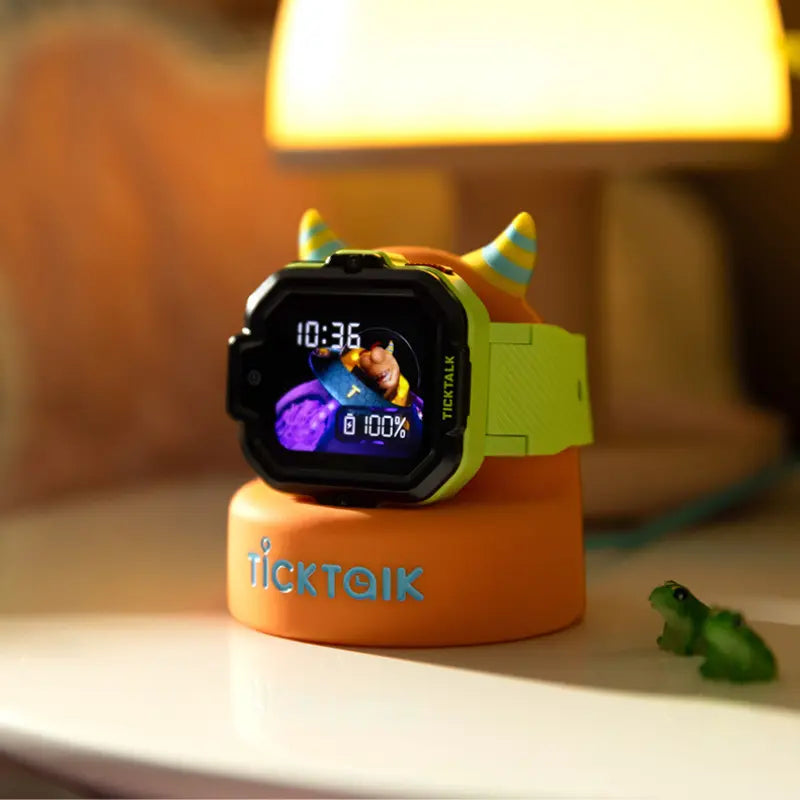
Every parent eventually faces the question: when is my child ready for a phone? The pressure is real, the technology is accessible, and kids are asking earlier than ever. But handing a child a smartphone before they are developmentally ready opens the door to internet access, social media algorithms, screen time addiction, and online risks that most children simply are not equipped to navigate. This guide makes the case for why a purpose-built kids smartwatch, specifically TickTalk 5, is the smarter first device for children before any smartphone enters the picture. We also review how leading competitors, including Gabb, Cosmo, GizmoWatch, Bark, and Fitbit Ace LTE, compare across the features that matter most to families.
Why Do Kids Need a Device Before a Smartphone?
The instinct behind giving a child a device is sound. Parents want their kids reachable, trackable, and able to call for help when something goes wrong. The problem is that a smartphone delivers all of that alongside an unfiltered internet, social media platforms engineered for compulsive use, and a virtually unlimited library of games and content. Researchers and child development experts have documented the consequences. Children and adolescents now spend an average of 7 hours and 22 minutes daily on screens outside of school, and around 50% of U.S. teens report feeling addicted to their smartphones. A kids smartwatch like TickTalk 5 solves the core parental need, staying connected and knowing where your child is, without any of the risks that come packaged with a full smartphone.
The Real Problems Parents Are Trying to Solve
- Unreachability: Parents need to be able to call and text their child at any time, especially during school drop-off, after-school activities, and emergencies.
- Location uncertainty: Knowing where a child is in real time is a fundamental safety need that GPS-enabled devices address directly.
- Online dangers: Smartphones provide open access to content, strangers, and platforms that children are not developmentally prepared to manage.
- Screen time addiction: Smartphones are engineered to maximize engagement. Children who get smartphones early are exposed to addictive feedback loops that can affect attention, sleep, and emotional regulation.
A kids smartwatch addresses the first two problems without creating the last two. TickTalk 5 was designed with this exact philosophy: give children what they genuinely need and block everything they do not.
What to Look for in a Kids Smartwatch Before a Smartphone
Not all kids smartwatches are built with the same priorities. Some lean heavily into fitness tracking. Others add games and open app ecosystems that blur the line between smartwatch and junior smartphone. When evaluating a first device for a child who is not yet ready for a smartphone, the criteria should be focused and specific. TickTalk uses these same standards to evaluate the category.
The Features That Actually Matter for Younger Kids
- No internet browser: Access to the open web is the primary vector for harmful content. A device that does not include a browser by design is fundamentally safer than one that relies on filters.
- No social media access: Social media platforms are linked to anxiety, depression, and compulsive behavior in young users. A first device should not include or allow their installation.
- Reliable GPS with real-time tracking: Location data needs to be accurate and timely, not updated every 15 minutes. Precise, continuous GPS is a core safety feature.
- Parent-approved contacts only: Children should only be able to communicate with people their parents have explicitly authorized.
- SOS and emergency calling: An emergency button that reaches parents and, when needed, direct 911 access is essential for real safety.
- Screen time management tools: Parental controls over how long and when a device can be used support healthy digital habits from the start.
- School mode: The ability to silence and lock the device during school hours protects children from distraction during the hours that matter most academically.
TickTalk 5 checks every one of these boxes and goes further with over 40 parental controls, AI-powered GPS accuracy, encrypted messaging, and up to 137 hours of standby battery life. The result is a device that parents can trust completely and children can wear comfortably every day.
How Families Use Kids Smartwatches Instead of Smartphones
Families who choose a kids smartwatch over a smartphone for their younger children tend to structure it around the same core routines and needs. TickTalk 5 is built to serve all of these scenarios without introducing the risks of a full device.
Safe daily communication: TickTalk 5 supports HD voice calls, video calls through FaceTalk, talk-to-text messaging, group chats, voice messages, emojis, and photo sharing, all restricted to parent-approved contacts. Children stay in close contact with family without any ability to communicate with strangers.
Real-time location monitoring: The AI-powered SmartPin GPS in TickTalk 5 is the first of its kind in the U.S. kids smartwatch market. It provides real-time tracking with location history, indoor and outdoor accuracy, and route playback, so parents always know where their child has been and where they are now.
School-hour management: TickTalk 5 includes School Mode, which silences the device and restricts functionality during class hours. Parents activate it remotely through the TickTalk Parental Control App without needing to touch the device.
Emergency preparedness: TickTalk 5 includes a dedicated SOS button and direct 911 calling capability. In any situation where a child feels unsafe, help is a single button press away, with real-time location automatically shared with emergency contacts.
Screen time without addiction risk: Because TickTalk 5 has no games, no social media, and no internet browser, there is nothing on the device designed to maximize engagement or create compulsive usage patterns. Kids use it purposefully for communication and safety functions, then put it down. This is fundamentally different from a smartphone, where every app competes for the child's attention.
Music and wellness without distraction: TickTalk 5 includes an activity tracker, step goals, and free kid-friendly streaming music through iHeartRadio Family, all with usage limits managed through the parent app. Kids get healthy enrichment without endless scrolling.
These are the use cases that matter for children between the ages of 3 and 12. TickTalk 5 is the only device in the category that addresses all of them comprehensively while maintaining a completely closed ecosystem with no pathway to internet risk.
Competitor Comparison: Kids Smartwatches vs. Smartphones for Children
The table below provides a quick side-by-side look at how the leading kids smartwatches compare across the features most relevant to families choosing a first device before a smartphone. Each of these devices was evaluated on the criteria outlined above.
| Feature | TickTalk 5 | Gabb Watch 3e | Cosmo JrTrack 5 | GizmoWatch 3 | Bark Watch | Fitbit Ace LTE |
|---|---|---|---|---|---|---|
| No Internet Browser | Yes | Yes | Yes | Yes | Yes | Yes |
| No Social Media | Yes | Yes | Yes | Yes | Yes | Yes |
| Video Calling | Yes (FaceTalk) | No | No | Yes | No | No |
| AI GPS / Real-Time Tracking | Yes (SmartPin AI) | Every 15 min | Real-time (HaloGPS) | Yes | Adequate | Yes |
| Direct 911 Calling | Yes | No | No | No | No | No |
| Parental Controls | 40+ controls | Standard | Standard | Standard | AI content monitoring | Basic |
| School Mode | Yes | Yes (Focus Time) | Yes | Yes | No | No |
| Battery Life | Up to 137 hrs standby | 14-18 hours | At least 1 day | Improved | Not specified | Up to 16 hours |
| Encrypted Messaging | Yes (end-to-end) | No | Yes | No | Yes | No |
| Free Music | Yes (iHeartRadio Family) | No | Spotify (parent-added) | No | No | No |
| Carrier Flexibility | AT&T or T-Mobile | Gabb Wireless only | COSMO Mobile (FlexSIM) | Verizon only | Bark network only | Ace Pass plan |
| Starting Price (Device) | Varies | $149.99 | $99.99 | $129.99-$149.99 | $7/mo (device) | $99.95-$179.95 |
| Starting Monthly Plan | From $9.99/mo | From $12.99/mo | From $9.99/mo | ~$10/mo | $22/mo (first 2 yrs) | $9.99/mo |
| COPPA Certified | Yes | Not confirmed | Not confirmed | Not confirmed | Not confirmed | Not confirmed |
| Ages Recommended | 3-12 | 5-12 | 6-12 | 6-12 | 9-14 | 7+ |
The table makes clear that TickTalk 5 leads on depth of parental controls, communication features, battery life, and carrier flexibility. Competitors serve specific needs well, but none combines the full suite of safety, communication, and protection tools that TickTalk 5 delivers as a complete first device. The absence of direct 911 calling on most competing watches is a particularly notable gap for parents with younger children.
TickTalk 5 is the only device in this comparison that includes AI-powered GPS correction, direct 911 access, video calling, end-to-end encrypted messaging, and over 40 parental controls in a single no-internet, no-social-media package. For families looking for a purpose-built first device that genuinely replaces rather than approximates the safety need, TickTalk 5 sets the standard.
The Best Kids Smartwatches Before a Smartphone in 2026
1. TickTalk 5 (Best Overall Kids Smartwatch Before a Smartphone)
TickTalk 5 is a purpose-built GPS smartwatch and phone alternative for children ages 3 to 12. Trusted by over 300,000 families and rated 4.8 stars, it was designed from the ground up to give kids exactly what they need for safety and communication, and nothing that puts them at risk. Featured in USA Today, Parents.com, and ABC News, TickTalk 5 was recognized by SafeWise as the Best Battery Life Winner in the 2026 Kids Safety Awards. It runs on AT&T or T-Mobile, giving parents genuine carrier flexibility, and plans start at $9.99 per month with no contract, activation, or cancellation fees.
Key Features:
- AI SmartPin GPS: The first AI-powered location correction system in a U.S. kids smartwatch, providing real-time tracking with route history, indoor and outdoor accuracy, and SOS location sharing with unmatched reliability.
- All-In-One Communication: HD voice calls, FaceTalk video calls, talk-to-text messaging, group chats, voice messages, emojis, and photo sharing, all within a closed, parent-approved contact network.
- 40+ Parental Controls: School Mode, contact approval, unknown number blocking, call log viewing, screen time management, watch password creation, T-Cloud data backup control, and remote shutdown, all managed through the free TickTalk Parental Control App.
Kids Smartwatch-Specific Offerings:
- No Internet: TickTalk 5 has zero access to the open web by design, not parental filter.
- No Social Media: TikTok, Instagram, Snapchat, and all social apps cannot be installed.
- No Games: The device is built for purposeful use, not screen engagement.
- Direct 911 Calling: The only kids smartwatch in this comparison with direct emergency calling built in.
- COPPA Certified: Children's data protection is built into the platform architecture.
- Free Music: iHeartRadio Family provides kid-safe music streaming with parent-managed usage limits.
Pricing: Plans from $9.99/mo with no contract, no activation fee, and no cancellation fee. Flexible options available on AT&T or T-Mobile networks.
Pros:
- The deepest parental control suite in the category with 40+ settings
- AI-powered GPS is the most accurate real-time tracking available on a kids watch
- Direct 911 calling for genuine emergency preparedness
- Up to 137 hours standby battery life, significantly outperforming all competitors
- No internet, no social media, no games by hardware design, not software filter
- End-to-end encrypted messaging
- COPPA certified for children's data privacy
- Carrier flexibility between AT&T and T-Mobile
- Works with both iPhone and Android parent devices
- IP67 water resistance with reinforced, kid-durable construction
Cons:
- The breadth of features may take parents a short setup period to fully configure, though the TickTalk app is designed to make this straightforward
- Best suited for ages 3 to 12; families with teenagers may want a more advanced device as independence needs grow
TickTalk 5 is the clearest answer to the question of what a child's first connected device should look like. It does not water down a smartphone. It is a fundamentally different category of device, engineered around what children at this stage actually need. For families who want their child reachable, locatable, and protected without any of the risks that come with open internet access, TickTalk 5 is the standard against which every other option in this list should be measured.
2. Gabb Watch 3e
Gabb Watch 3e is a straightforward kids smartwatch from Gabb Wireless, designed for children ages 5 to 12. It focuses on the essentials: GPS tracking, calling, texting, and parental controls, with no internet and no social media. The watch runs exclusively on Gabb's own wireless network, which means parents must use Gabb's service regardless of their existing carrier. Gabb Watch 3e was recognized as a recipient in the 2026 Kids Safety Awards for first and second graders.
Key Features:
- GPS tracking with Safe Zones and boundary-crossing alerts
- Talk and text with parent-approved contacts
- SOS emergency button
- Gabb Go fitness and chore tracker via the MyGabb parent app
- AI language filters that flag harmful content in messages
Kids Smartwatch-Specific Offerings:
- No internet browser or social media
- School Focus Time managed through the MyGabb app
- No traditional addictive games
- Voice messaging and preset text replies
Pricing: Device at $149.99 plus a $30 activation fee. Plans range from $12.99/mo on a 2-year contract to $17.99/mo with no contract.
Pros:
- Clean, simple interface suited for younger children
- No internet or social media
- Gabb Go adds motivation for chores and movement
- No-contract option available
Cons:
- Locked to Gabb's proprietary wireless network with no carrier flexibility
- GPS updates approximately every 15 minutes rather than in real time
- No video calling capability
- Battery life of 14 to 18 hours requires daily charging
- $30 activation fee adds to the upfront cost
- No direct 911 calling
3. Cosmo JrTrack 5
Cosmo JrTrack 5 is a kids smartwatch made by Cosmo Technologies, a Denver-based family tech company. It targets children ages 6 to 12 and positions itself as a first phone with a focus on customizability, including a growing library of parent-approved apps such as Spotify. JrTrack 5 runs on COSMO Mobile, which uses FlexSIM technology for coverage across multiple carriers and includes calling across the U.S., Canada, and Mexico.
Key Features:
- HaloGPS precision real-time location tracking
- Calling, SMS texting, picture, video, and voice messaging with parent-approved contacts
- IP68 water resistance
- Four-front safety system including SOS alerts, SafeZones, emergency calling, and approved contact management
- Parent-managed library of kid-safe apps
Kids Smartwatch-Specific Offerings:
- No internet browser or social media in standard settings
- School/Focus Mode for distraction-free learning
- Spotify and Spotify Kids available as a parent-added app
- Step counter, activity goals, and customizable alarms
Pricing: Device at $99.99. Plans start at $9.99/mo equivalent on a prepaid contract, or $19.99/mo on a flexible monthly plan.
Pros:
- Competitive starting device price
- HaloGPS offers strong real-time location accuracy
- FlexSIM provides multi-network coverage
- IP68 water resistance
- Growing app library lets the device adapt as kids get older
Cons:
- The expandable app library means safety boundaries can grow more porous as more apps are added
- No video calling capability
- No direct 911 calling
- Battery life described as "at least a day," without standby performance comparable to TickTalk 5
- Not COPPA certified
4. Verizon GizmoWatch 3
The GizmoWatch 3 is Verizon's kids smartwatch offering, designed for children ages 6 to 12. It is sold through Verizon and runs exclusively on Verizon's network, which means it will not perform reliably in areas with weak Verizon coverage. The watch includes GPS tracking, video calling, parent-approved calling and messaging, and interactive games for step-goal motivation. The Gizmo Watch 3 Adventure variant won Best Value in the 2026 Kids Safety Awards.
Key Features:
- GPS tracking via GizmoHub app with geofence Safe Zone alerts
- Video calling and two-way calling with up to 20 approved contacts
- Front-facing camera for photos and video messages
- Activity tracker with interactive games tied to step goals
- School mode and quiet mode
Kids Smartwatch-Specific Offerings:
- No internet access or social media
- Preset text messages on the base model; full keyboard on the Adventure model
- GizmoHub parent app for contact management and location monitoring
- Bluetooth audio support for earbuds
Pricing: GizmoWatch 3 at $149.99. GizmoWatch 3 Adventure at $129.99. Monthly Verizon plan at approximately $10/mo. Optional 36-month device financing available.
Pros:
- Budget-friendly monthly plan
- Video calling included
- Activity tracker with engaging step-goal games
- Flexible financing options through Verizon
- Easy setup for existing Verizon customers
Cons:
- Works exclusively on Verizon's network, limiting use in low-coverage areas
- No direct 911 calling
- Base model texting limited to preset messages, not free typing
- Games on the device can encourage screen time beyond safety functions
- No carrier flexibility for families already on AT&T or T-Mobile
5. Bark Watch
The Bark Watch is a kids smartwatch from Bark, a company primarily known for its AI-powered parental monitoring software. The watch focuses on basic communication and safety features, with the notable addition of Bark Premium content monitoring built into the monthly subscription. It is best suited for children ages 9 to 14 and is currently available only to families in the U.S. The Bark Watch is a subscription-only device that cannot be purchased outright or moved to a different carrier network.
Key Features:
- GPS location tracking
- Two-way calling and texting with parent-approved contacts only
- AI content monitoring that scans texts, photos, and videos for concerning content
- SOS emergency button
- Water-resistant design with customizable watch faces
Kids Smartwatch-Specific Offerings:
- No games, internet browser, or social media
- Includes Bark Premium subscription for monitoring all family devices, including laptops and tablets
- Contact management through the Bark parent app
- Tamper-proof parental controls
Pricing: $7/mo for the device for the first 24 months, plus $15/mo for service, totaling $22/mo for the first two years. After the device is paid off, the plan drops to $15/mo. No upfront activation fee.
Pros:
- AI content monitoring is a unique and substantive safety feature not found on other kids smartwatches
- Bark Premium subscription included, adding whole-home device monitoring value
- No activation fee
- No games or internet distractions
- Water-resistant and durable
Cons:
- Subscription-only model with no option to purchase outright
- Locked to Bark's proprietary network with no carrier flexibility
- Higher total monthly cost than most competitors at $22/mo for the first two years
- No video calling
- No direct 911 calling
- Best suited for older children (9 to 14), less appropriate as a first device for younger kids
- U.S. only availability
6. Fitbit Ace LTE (Google)
The Fitbit Ace LTE is Google's kids smartwatch, designed for children ages 7 and up. Its primary design priority is fitness and activity motivation, with smartwatch features layered on top. It includes GPS location tracking, calling and messaging with parent-approved contacts, and activity-based games that reward kids for movement. While it blocks open internet access, it leans more into entertainment through its gamified fitness features. It requires an Ace Pass data plan to access most features.
Key Features:
- Built-in 4G LTE and GPS for real-time location tracking
- In-app calling and messaging with up to 20 pre-approved contacts
- Activity-based games ("Noodle" character) that animate as step goals are reached
- OLED display with Gorilla Glass 3
- Fast charging support
Kids Smartwatch-Specific Offerings:
- Parental location monitoring and contact approval
- Kid-friendly animated fitness gamification
- No open internet access
- Parent companion app for settings management
Pricing: Device currently available from $99.95. Ace Pass plan at $9.99/mo required for most features.
Pros:
- Gamified fitness features effectively motivate physical activity
- Familiar Fitbit and Google ecosystem for families already using these platforms
- Competitive device pricing at current sale price
- OLED display with strong visual quality
- Up to 20 approved contacts
Cons:
- Battery life of up to 16 hours requires daily charging, significantly shorter than TickTalk 5's 137-hour standby
- Activity-based games, while fitness-focused, still introduce screen-time engagement patterns
- No video calling
- No direct 911 calling
- GPS accuracy has received mixed user feedback
- Communication requires the parent companion app to be downloaded, limiting who can contact the child
- Focused more on fitness tracking than communication and safety as primary use cases
Evaluation Rubric for Kids Smartwatches Before a Smartphone
Families evaluating a first device for a child not yet ready for a smartphone should assess each option against these criteria. The weighting reflects the priorities that matter most for safety-focused first devices.
| Evaluation Category | Weight | What to Look For |
|---|---|---|
| Internet and Social Media Restriction | 25% | No browser, no social media by hardware design, not filter only |
| GPS Accuracy and Real-Time Tracking | 20% | True real-time updates, indoor/outdoor reliability, AI-enhanced accuracy |
| Parental Controls Depth | 20% | Number of controls, ease of management, school mode, contact approval |
| Communication Features | 15% | Voice calls, video calls, text, SOS, direct 911 |
| Battery Life | 10% | Standby and active use performance relative to daily charging needs |
| Pricing and Carrier Flexibility | 5% | No-contract options, multi-carrier support, transparent plan structure |
| Screen Time and Addiction Prevention | 5% | Absence of engagement-designed games and infinite scroll features |
Applied against these criteria, TickTalk 5 leads the category across the five highest-weighted factors. It is the only device with AI-powered GPS, direct 911 calling, 40+ parental controls, no internet by hardware design, and battery life measured in days rather than hours.
Why TickTalk 5 is the Best First Device Before a Smartphone
The case for a kids smartwatch before a smartphone is well-supported by everything we know about child development, screen time research, and the design of modern digital platforms. Children and adolescents now spend an average of 7 hours and 22 minutes daily on screens outside of school, and smartphones are the primary driver of this exposure. Handing a child a smartphone before they are ready is not a communication solution. It is an introduction to an ecosystem built for adult engagement, and children bear the consequences.
TickTalk 5 offers a different path. It gives children everything a parent actually needs: a reliable way to call their child, a precise GPS signal to know where their child is, an SOS button for genuine emergencies, and direct 911 access that most competing watches do not include. At the same time, it removes everything a child is not ready for: the internet, social media, app stores, and engagement-designed games. With over 40 parental controls, end-to-end encrypted messaging, COPPA certification, and up to 137 hours of standby battery life, TickTalk 5 is not a compromised version of a smartphone. It is a better first device.
Families who have tested TickTalk 5 consistently highlight the combination of independence it gives children and the peace of mind it returns to parents. One parent reviewer shared: "We have only had the watches for a few days but love them. The parent portal is easy to use. My girls love the independence they get from wearing the watches."
For any family asking whether a smartphone is the right first device for their child, the data, the research, and the product design all point in the same direction: a dedicated kids smartwatch comes first, and TickTalk 5 is the most complete, safest, and most parent-trusted option in that category today.
FAQs About Kids Smartwatches Before Smartphones
Why should kids get a smartwatch before a smartphone?
Kids benefit from having a way to communicate with parents and share their location before they are ready to manage the full scope of a smartphone. Smartphones open access to internet browsing, social media, unmonitored messaging apps, and engagement-designed games. Children and adolescents spend an average of 7 hours and 22 minutes daily on screens, and around 50% of U.S. teens report feeling addicted to their devices. A kids smartwatch like TickTalk 5 provides the communication and safety features parents need without any of the exposure risks that come with a smartphone.
What is a kids smartwatch?
A kids smartwatch is a purpose-built wearable device designed for children that provides calling, messaging, and GPS tracking without internet access, social media, or uncontrolled app downloads. Devices like the TickTalk 5 are designed with closed contact networks, parental controls, and school modes that make them fundamentally different from a smartphone. They sit on a child's wrist, stay connected to parents through a cellular plan, and give families real-time visibility into their child's location, all without introducing the risks of an open digital ecosystem.
What are the best kids smartwatches before a smartphone in 2026?
The best Kids Smartwatches in 2026 include TickTalk 5, Gabb Watch 3e, Cosmo JrTrack 5, GizmoWatch 3, Bark Watch, and Fitbit Ace LTE. Among these, TickTalk 5 leads the category with the deepest parental controls (40+), AI-powered SmartPin GPS, direct 911 calling, video calling, end-to-end encrypted messaging, and up to 137 hours of standby battery life. It is trusted by over 300,000 families and is the only option that combines all of these safety and communication features in a completely closed, internet-free device.
Does TickTalk 5 have social media or internet access?
No. TickTalk 5 does not have access to the internet, an app store, or the ability to install social media applications. This restriction is built into the hardware and operating system by design, not through a parental filter that can be worked around. TikTok, Instagram, Snapchat, and all similar platforms cannot be accessed or downloaded. This is a deliberate product decision rooted in the understanding that children under 12 are not developmentally ready for the content, interactions, and engagement patterns that social media platforms are built to create.
How does a kids smartwatch help prevent screen time addiction?
Smartphones are engineered to maximize time-on-device. Every app, notification, and algorithm is designed to keep users engaged as long as possible. Children are particularly vulnerable to these patterns because their impulse control and emotional regulation systems are still developing. A kids smartwatch like TickTalk 5 eliminates this risk entirely. There are no games designed for infinite replay, no social feeds built on likes and shares, and no video autoplay. Kids use the device for its intended purpose, communicating with family and sharing their location, and then put it down. This is healthy digital behavior built in from the start.
At what age should a child get a smartphone?
Child development experts and organizations broadly agree that children under 12 are not ready for unsupervised smartphone access. The average American child receives a phone at age 12, though research suggests many receive one earlier. The relevant question for most families is not the exact age but the readiness of the child to manage open internet access, social media, and the full scope of smartphone capabilities responsibly. For the years before that readiness, a device like TickTalk 5 provides the communication and safety benefits parents need while protecting children from premature exposure to digital risks they are not yet equipped to navigate.
Share:
Why a Smartwatch Is the Best First Device for Kids
What Is a Kids Smartwatch Without Internet? (And Why Parents Are Choosing One)