

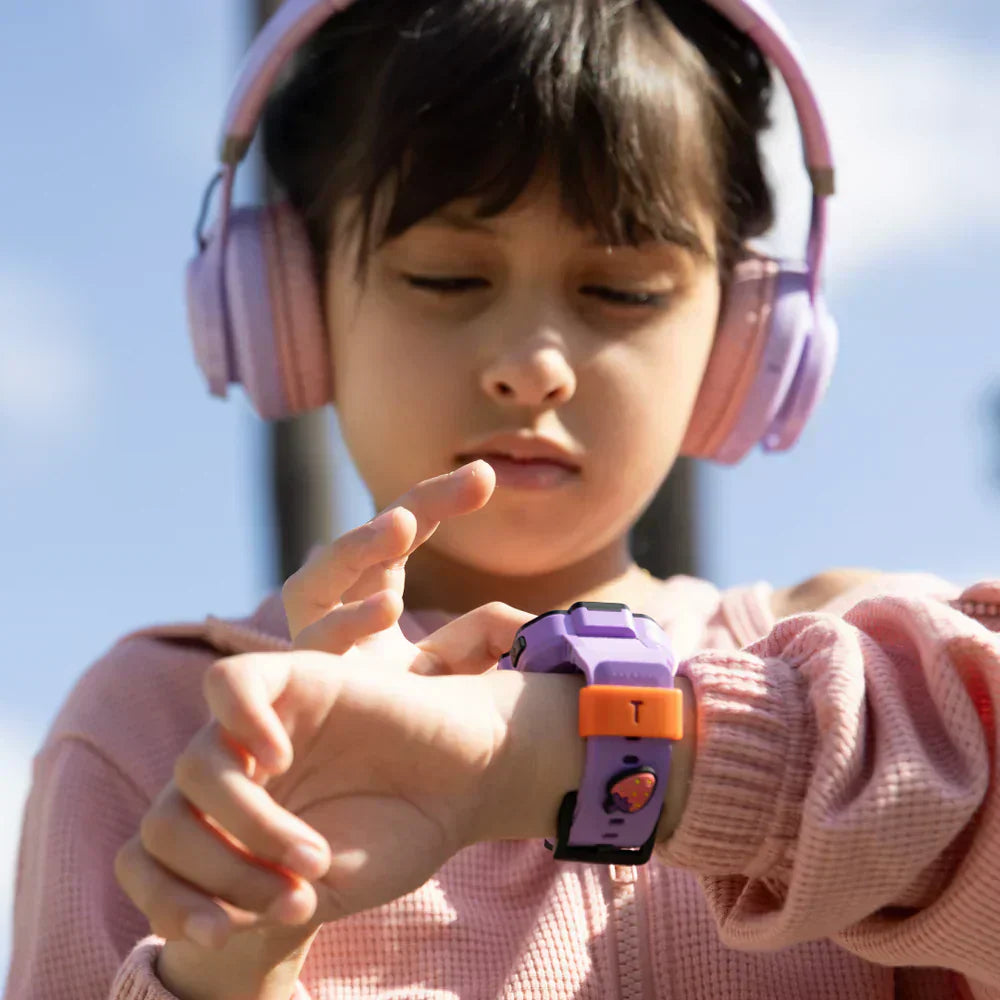
When your child starts walking to school, heading to after-school activities, or spending time away from home, one question comes up quickly: how do you stay connected and know where they are? In 2026, parents have more options than ever, but that abundance of choice can make the decision harder, not easier. Should you slip an AirTag into their backpack? Hand them a flip phone? Hold off until they are ready for a full smartphone? Or is a kids smartwatch the right middle ground? This guide breaks down four of the most common solutions, Apple AirTag, standalone GPS trackers, flip phones, smartphones, and kids smartwatches, comparing them across the four areas that matter most to families: real-time tracking, two-way communication, safety and SOS, and total cost. TickTalk draws on its experience building purpose-built communication and safety devices for children ages 3 to 12 to help you find the right fit for your family.
What Is Child Location Tracking, and Why Does It Matter in 2026?
Child location tracking refers to the tools parents use to know where their child is throughout the day without requiring constant phone calls or check-ins. In 2026, the category has expanded well beyond simple GPS dots on a map. The best solutions combine real-time location data with two-way communication and emergency response features, so that a parent can not only see where their child is but also reach them instantly. According to survey data, privacy and safety concerns are the top fear parents have around their children and technology, cited by 47% of parents. For families whose kids are gaining independence, whether that means walking home alone, attending sports practice, or visiting a friend's house, having a reliable, child-appropriate way to stay connected is no longer optional. It is the foundation of confident parenting.
What to Look for in a Child Safety and Communication Device
Not every tracking solution is built for children. Some were designed for luggage, some for teenagers with full smartphones, and some for adults who want a second phone line. Before comparing specific devices, it helps to understand what an effective child safety device actually needs to do for a family with kids ages 3 to 12.
Features of the Best Child Safety Solutions
- Real-time, cellular-based GPS tracking that updates frequently and does not depend on nearby third-party devices
- Two-way communication, so a child can reach a parent and a parent can reach the child
- One-tap SOS and 911 access with automatic location alerts sent to parents
- Parental controls that approve contacts, block unknown callers, and limit exposure to the open internet
- Durability and wearability designed for active children, not adults
- Transparent, family-friendly pricing with no long-term contracts
- No social media, no open internet, no games that distract from healthy habits
TickTalk evaluates every device in this guide against that list. As you will see, only one category of device meets all seven criteria consistently.
Apple AirTag: Affordable Item Tracker, Not a Child Safety Device
Apple AirTag is a small, quarter-sized Bluetooth tracker that Apple designed to help users locate misplaced belongings, such as keys, wallets, and luggage. Parents have adopted it as a low-cost way to keep tabs on a child's general whereabouts, typically by attaching it to a backpack or slipping it into a jacket pocket. At approximately $29 per unit with no monthly fee, the appeal is obvious. However, understanding how AirTags actually work makes their limitations for child safety clear.
Apple AirTag Key Features
- Bluetooth Low Energy (BLE) proximity detection within approximately 30 to 100 feet
- Location updates through Apple's Find My network, relayed anonymously by nearby Apple devices
- Precision Finding on supported iPhones for close-range directional guidance
- IP67 water resistance
- No monthly subscription fee; battery replacement required approximately once per year
How Apple AirTag Works and Where It Falls Short for Kids
AirTag does not contain GPS hardware. Instead, it relies on Bluetooth to ping nearby Apple devices, which then anonymously relay its location back through iCloud. This means location updates only occur when another iPhone, iPad, or Mac is physically close enough to detect the signal. In suburban neighborhoods and densely populated urban areas, this can work reasonably well. In areas with fewer Apple device users, rural routes, school fields, or parks, updates can be significantly delayed or missed entirely.
Apple has publicly stated that AirTag is designed exclusively for tracking objects, not people. Several limitations make this distinction important for parents. AirTag cannot make or receive calls. It cannot send an SOS alert. It cannot notify a parent when a child leaves a safe zone in real time. And critically, it offers no two-way communication whatsoever. If a child needs help, the AirTag provides no mechanism for them to ask for it.
Apple AirTag: Best For
- Adding a secondary layer of location awareness to an existing setup, such as tracking a backpack at a crowded theme park
- Apple ecosystem households that want a low-cost backup tracker for occasional use
- Families whose children already have a primary communication device and need a passive supplement
Apple AirTag Pricing
- Single unit: approximately $29
- Four-pack: approximately $99
- No monthly fee; requires an iPhone running iOS 14.5 or later
AirTag is an accessible and well-made item tracker that many parents find useful in specific scenarios, particularly crowded events where its Precision Finding feature shines. However, for daily child safety, it does not deliver reliable real-time tracking, offers zero communication capability, and provides no emergency response function. Apple itself recommends against using it as a child tracking solution.
Standalone GPS Trackers: Purpose-Built for Location, Communication Varies
Standalone GPS trackers for kids, such as AngelSense, Jiobit, and similar devices, represent a significant step up from Bluetooth-based item trackers. They use actual GPS and cellular networks to provide real-time location updates, which means they work independently of any nearby devices and update continuously rather than opportunistically. These trackers are purpose-built for child safety and typically include geofencing alerts, SOS buttons, and in some cases two-way audio.
Standalone GPS Tracker Key Features
- True GPS and cellular tracking with frequent location updates
- Geofencing with parent alerts when a child enters or exits a defined area
- SOS panic button
- Some devices include two-way voice calling or listen-in audio
- Multiple wear options, including clips, belt attachments, and wristbands
- Monthly subscription required
AngelSense: A Closer Look
AngelSense is widely regarded as the most comprehensive standalone GPS tracker for children, particularly for families managing elevated supervision needs. It provides continuous real-time location updates, two-way voice calling, a listen-in audio feature, Runner Mode that activates 10-second location pings when a child leaves a safe zone, and tamper-resistant attachment options. AngelSense is specifically engineered for children with autism, ADHD, or other conditions that may involve wandering or elopement risk, and its feature set reflects that focus deeply.
Standalone GPS Tracker: Best For
- Children with autism, special needs, or elevated wandering risk where continuous monitoring is essential
- Families who need the most robust crisis-response toolkit available in a wearable form
- Situations where the child may resist or be unable to interact with a screen-based device
Standalone GPS Tracker Pricing
- AngelSense device: up to $229 (frequent free-device promotions with subscription commitment)
- Monthly plans: approximately $45 to $65 per month depending on billing term
- 12-month contract typically required for best pricing
Standalone GPS trackers solve the core tracking problem exceptionally well, and AngelSense in particular is an industry leader for specialized needs. However, for the typical school-age child who needs both location visibility and the ability to communicate with parents and approved contacts, a standalone tracker addresses only part of the equation. The monthly cost is also substantially higher than kids smartwatch alternatives, and the devices do not support the kind of two-way messaging and video calling that families increasingly rely on.
Flip Phones for Kids: Basic Communication, Limited Safety
Flip phones have experienced a modest resurgence as parents look for ways to give children a communication tool without the risks that come with a full smartphone. Basic kids flip phones offer voice calling and texting on a simple, durable form factor, with no open internet, social media, or app store in their most restricted configurations. Models like the Gabb Phone, Sunbeam F1, and Nokia 2780 Flip occupy this space.
Kids Flip Phone Key Features
- Voice calls and SMS texting
- Simple, physical keypad interface
- Durable, compact design
- No app store access in restricted models
- Basic camera on some models
- GPS tracking absent or limited on most basic models
Flip Phone Limitations for Younger Children
For children ages 3 to 12, the flip phone presents several practical challenges. Most basic flip phone models do not include GPS tracking, meaning a parent cannot check a child's location from an app. The child must remember to keep the phone with them, answer it when it rings, and operate a keypad, which can be difficult for younger children. Parental controls on most basic flip phones are limited compared to purpose-built kids devices.
More feature-rich flip phones that do include internet access, such as certain Android-based models, reintroduce the very risks parents are trying to avoid. And even more restricted models designed for children typically lack geofencing, SOS alerts, and real-time GPS, all features that parents of elementary-age children are actively seeking.
Flip Phone: Best For
- Older children, typically tweens and early teens, who need a communication device but whose parents want to limit smartphone exposure
- Families where two-way calling and texting are the primary need and GPS tracking is a lower priority
- Children who are socially conscious about carrying a device that looks like a phone among peers
Flip Phone Pricing
- Basic models: $50 to $200 for the device
- Monthly service plans: generally $15 to $35 per month depending on carrier and plan
- Kids-specific models such as the Gabb Phone start at approximately $99.99 with plans from around $19.99 per month
A flip phone can be a reasonable first communication device for an older child, particularly one who is transitioning toward more independence. For the 3 to 12 age group, however, most flip phones do not provide GPS tracking, real-time location alerts, or the layered safety features that parents specifically seek for younger children exploring independence.
Smartphones for Kids: Maximum Connectivity, Maximum Complexity
Giving a child a smartphone, whether a full-featured device or a parent-managed version like the Bark Phone or Pinwheel, represents the most powerful and the most complex option on this list. Smartphones offer GPS through built-in apps, two-way communication across multiple platforms, and access to a wide range of tools. For older children, that breadth can be appropriate and valuable.
Kids Smartphone Key Features
- Full GPS and cellular location tracking via apps like Find My or Life360
- Voice calls, video calls, messaging across multiple platforms
- Parental control apps available (Bark, Qustodio, Google Family Link, Apple Screen Time)
- Access to educational apps and content
- Camera, media, and entertainment capabilities
- Available in locked-down configurations for some brands
Smartphone Limitations for Ages 3 to 12
Research published in the Journal of Human Development and Capabilities found that smartphone use before age 13 was associated with measurable mental health concerns. Surveys show that 75% of US parents of children ages 5 to 11 check the websites and apps their child uses, and 62% use parental control tools but only 25% find them fully effective. For children in elementary school, the challenge is not simply installing parental controls. Children can turn off location services, leave the phone in their bag, or access content through workarounds that even careful parents may not anticipate.
Smartphone: Best For
- Children ages 12 and older who have demonstrated consistent responsibility and maturity
- Families where broader connectivity, schoolwork tools, and social coordination are genuine needs
- Situations where a child will be in environments that require a wider range of communication options
Smartphone Pricing
- Device cost: $0 to $1,000+ depending on model
- Monthly service plans: $20 to $60 per month for an additional line
- Parental control apps: many free options exist; premium tools range from $5 to $14 per month
For a 10-year-old walking home from school, a smartphone is a significant amount of technology and responsibility. For a 6-year-old heading to their first day of camp, it is rarely the right fit. The parental concern that surrounds smartphones for young children is real, and for ages 3 to 12, purpose-built alternatives consistently offer a more appropriate balance of safety, communication, and age-appropriate design.
TickTalk 5: The Complete Kids Smartwatch Built for Connection and Safety
TickTalk 5 is the current flagship from TickTalk, a company founded by parents who wanted to give families the connection they needed without the open internet, social media, or unsupervised access that comes with a full smartphone. Designed for children ages 3 to 12, the TickTalk 5 is a 4G LTE kids smartwatch that combines real-time GPS, HD voice and video calling, secure messaging, SOS and 911 access, and 40+ parental controls in a single wearable device. It has earned a 4.8-star average product rating and has been recognized by SafeWise as the Best Battery Life Winner in the 2026 Kids Safety Awards. It has been featured by Forbes Vetted, USA Today, Parents.com, and ABC News, and is trusted by hundreds of thousands of families.
TickTalk 5 Key Features
- AI SmartPin GPS: The first AI-powered location correction for kids smartwatches in the U.S., combining GPS, Wi-Fi, and cellular triangulation for reliable real-time tracking indoors and outdoors. Accuracy varies by environment.
- FaceTalk Video Calling: HD voice and video calling from the watch to a parent's phone or another TickTalk watch, using a built-in 5MP front camera. No smartphone required for the child.
- Real SMS and Secure Messaging: Talk-to-Text, voice messages, group chats, emojis, GIFs, photo sharing, and animated 3D greeting cards. Unknown numbers are automatically blocked. In-app chat is end-to-end encrypted; SMS is not.
- SOS and 911 Calling (U.S.): One-tap SOS sends an instant location alert to parents. Direct 911 dialing is built in. Remote Answer allows parents to silently listen to the child's surroundings in designated emergency situations.
- 40+ Parental Controls: Managed through the free TickTalk Parental Control App (iOS and Android). Parents approve every contact, schedule School Mode, block unknown callers, view call history, disable the watch from being powered off, and receive alerts when new contacts are added.
- SignalBooster Technology and Battery Life: Up to 100+ hours standby time. Winner of the SafeWise 2026 Best Battery Life award. ScreenSafe design and IP67 water resistance for everyday active play.
- No Internet, No Social Media, No Games: TickTalk 5 has no app store, no browser, and no social media. Every feature is purpose-built for communication and safety.
- Free Music via iHeartRadio Family (U.S. only): Kids can stream age-appropriate music, podcasts, and stories with parent-managed access settings.
- T-Cloud Backup and Data Sync: Contact and data backup for peace of mind.
TickTalk 5 Differentiators
- First AI-powered SmartPin location correction for kids smartwatches in the U.S.
- Dual-carrier choice through TickTalk Wireless, parents choose AT&T or T-Mobile for the best coverage in their area
- FaceTalk video calling, an exclusive branded feature not present in most competing kids watches
- Best Battery Life winner among kids smartwatches (SafeWise 2026 Kids Safety Awards)
- No contract, no activation fees, no cancellation fees
- Plans starting at $9.99 per month through TickTalk Wireless, the lowest entry price in the dedicated kids smartwatch category
Benefits of Using TickTalk 5
- Parents can see their child's real-time location and reach them instantly without handing over a full smartphone
- Children stay connected with family and approved contacts while staying protected from the open internet and social media
- School Mode schedules quiet hours automatically, so the watch does not interrupt class
- Emergency SOS and 911 access designed for the child to use independently in a genuine moment of need
- Longer battery life means fewer charging gaps and more consistent coverage throughout the week
- The closed ecosystem means no workarounds, no surprise app downloads, and no unexpected content
How Real Families Use TickTalk 5
- School day check-ins: A parent activates School Mode to silence the watch during class, then checks the GPS after school to confirm their child arrived at the bus stop or after-school program.
- After-school activities: A child at soccer practice presses SOS if they feel unwell; the parent receives an instant location alert and can call back immediately.
- Shared custody coordination: Both parents have the TickTalk Parental Control App installed and can both check location and communicate with the child without handing over a smartphone that might blur boundaries.
- First taste of independence: A third-grader walking three blocks home from the bus stop carries no phone, but parents can see every step and the child can call home in one tap.
TickTalk 5 Pricing
- Watch: $159.99, free U.S. shipping, 30-day returns, 1-year limited warranty
- TickTalk Wireless plans: starting at $9.99 per month plus tax, on AT&T or T-Mobile networks (U.S. only)
- No contract, no activation fees, no cancellation fees
- Plans can be adjusted or cancelled at any time
TickTalk 5 is the most complete safe smartphone alternative for children ages 3 to 12. It is the only device in this comparison that simultaneously delivers real-time GPS tracking, two-way video and voice communication, emergency SOS with 911 access, and comprehensive parental controls, all without internet, social media, or games. The combination of the lowest monthly plan price in the category, no-contract flexibility, and award-winning battery life makes TickTalk 5 a straightforward choice for families who want real connection and real safety.
TickTalk 5 vs AirTag vs GPS Tracker vs Flip Phone vs Smartphone: Feature Comparison
The table below provides a side-by-side snapshot of how each device category performs across the five most important dimensions for families with school-age children. Use it as a quick reference alongside the detailed sections above.
| Feature | Apple AirTag | Standalone GPS Tracker (e.g., AngelSense) | Flip Phone (Kids) | Smartphone (Kids) | TickTalk 5 (Kids Smartwatch) |
|---|---|---|---|---|---|
| Real-Time GPS Tracking | No (Bluetooth-based, network-dependent) | Yes (cellular GPS) | No / Limited | Yes (app-based) | Yes (AI SmartPin, multi-layer GPS) |
| Two-Way Voice Calling | No | Some models | Yes | Yes | Yes (HD VoLTE) |
| Video Calling | No | No | No | Yes | Yes (FaceTalk) |
| Secure Messaging | No | No | Basic SMS | Yes (varied) | Yes (in-app E2E encrypted; SMS not encrypted) |
| SOS / 911 Access | No | Yes (SOS button) | Limited | Via phone | Yes (one-tap SOS and direct 911, U.S.) |
| Geofencing Alerts | No | Yes | No | Via parental app | No |
| Parental Controls | Minimal | Moderate | Basic | Varies (app-dependent) | 40+ built-in controls |
| No Internet / Social Media | Yes | Yes | Some models | No | Yes |
| Wearable / Always-On | Clip / bag only | Yes (multiple wear options) | No (handheld) | No (handheld) | Yes (wrist-worn) |
| Battery Life | Up to 1 year (coin cell) | Up to 24 hours (daily charge) | 1 to 3 days | 1 day typical | Up to 100+ hours standby |
| Monthly Cost | $0 | $45 to $65/mo | $15 to $35/mo | $20 to $60/mo | From $9.99/mo (no contract) |
| Device Cost | ~$29 | ~$0 to $229 | ~$50 to $200 | $0 to $1,000+ | $159.99 |
| Age Appropriateness (Ages 3-12) | Passive supplement only | Strong for high-supervision needs | Better for older children | Better for 12+ | Purpose-built for ages 3 to 12 |
This table makes the trade-offs concrete. AirTag is the most affordable entry point but covers only one dimension. Standalone GPS trackers excel at location and are exceptional for high-supervision needs, but their monthly cost is the highest in the category. Flip phones provide basic communication without robust tracking. Smartphones offer the most capability but introduce the most risk for younger children. TickTalk 5 is the only option that covers all five dimensions with a design specifically built for the 3 to 12 age group and a monthly plan that starts lower than any competing dedicated device.
Why TickTalk 5 Is the Best Kids Smartwatch for Tracking, Communication, and Safety in 2026
Every device in this guide solves a part of the problem. AirTag solves passive location awareness at a very low cost. AngelSense solves intensive tracking for children with elevated supervision needs. A flip phone solves basic communication for older kids. A smartphone solves nearly everything, but introduces risks that most families with children under 12 are actively trying to avoid.
TickTalk 5 is the device that covers the full picture for the widest range of families. If a parent's primary concern is knowing where their child is, TickTalk provides real-time multi-layer GPS with AI SmartPin accuracy. If their concern is being able to reach their child instantly, TickTalk provides HD voice calls, FaceTalk video calls, and group messaging from the wrist. If their concern is what happens when something goes wrong, TickTalk provides one-tap SOS, direct 911 dialing, and instant location push notifications to parents. And if their concern is protecting their child from the open internet and social media, TickTalk removes those risks entirely.
The TickTalk Parental Control App puts all of these features in one place, free, for iOS and Android, with no steep learning curve. Plans start at $9.99 per month with no contract, no activation fee, and no cancellation fee, through TickTalk Wireless on AT&T or T-Mobile networks. That flexibility means families are never locked in, and they can always choose the network that has the strongest signal in their area.
For families navigating the decision of when and how to give a child their first connected device, TickTalk 5 is the smartwatch that makes that step feel manageable. It gives kids the independence to explore and the tools to reach home in one tap. It gives parents the visibility and control they need to worry less. That is what the TickTalk tagline means in practice: Connect More, Worry Less.
FAQs: Kids Smartwatch vs AirTag vs Phone vs Flip Phone
Why is a kids smartwatch the best solution for tracking a child?
A kids smartwatch like TickTalk 5 is the only category of device that combines real-time cellular GPS, two-way communication, and SOS emergency access in a wearable form factor designed for children. AirTags cannot make calls or send alerts. Flip phones lack GPS on most basic models. Smartphones introduce risks that most parents of younger children are trying to avoid. TickTalk 5 is purpose-built for ages 3 to 12, holds a 4.8-star product rating, and has been recognized by SafeWise as the Best Battery Life Winner in the 2026 Kids Safety Awards.
Is an AirTag good enough for tracking a child?
AirTag can provide a general sense of a child's location in areas with high Apple device density, and it is useful as a passive supplement in crowded spaces. However, it is not a true GPS device, does not update in real time, has no communication capability, and offers no emergency alert function. Apple itself does not recommend using AirTag to track people. For primary child safety, a purpose-built GPS and communication device like TickTalk 5 provides substantially more reliable and actionable information.
Should I give my child a smartphone or a smartwatch?
For children under 12, a purpose-built kids smartwatch is generally the better fit. Research links smartphone use before age 13 to measurable mental health concerns, and parental controls on smartphones are difficult to enforce consistently. A smartwatch like TickTalk 5 provides calling, messaging, and real-time GPS with no internet, no social media, and no app store, while 40+ built-in parental controls give parents clear oversight. Many families use a kids smartwatch as a first connected device and transition to a managed phone as the child gets older and demonstrates readiness.
Is a flip phone or a kids smartwatch better for a young child?
For children in the 3 to 12 age range, a kids smartwatch is generally the more practical and safer choice. Most basic flip phones do not include GPS tracking, meaning parents cannot check location through an app. They require the child to keep the phone with them, answer calls, and operate a keypad, which can be challenging for younger kids. TickTalk 5 is worn on the wrist, so it is always accessible, includes real-time GPS with AI SmartPin, supports video calling through FaceTalk, and comes with an SOS button. A flip phone may be a better fit for a tween who wants a device that looks like a phone among peers.
Does TickTalk 5 work without a smartphone?
Yes. TickTalk 5 is a standalone 4G LTE kids smartwatch. The child does not need a smartphone. It makes and receives HD voice calls and FaceTalk video calls directly from the watch. Parents manage the device through the free TickTalk Parental Control App on their own iOS or Android phone, but the child's watch operates fully independently using a TickTalk Wireless plan starting at $9.99 per month on AT&T or T-Mobile networks (U.S. only). No contract, no activation fees.
What are the top features to look for in a kids safety device?
The most important features in a child safety device are real-time cellular GPS tracking, two-way communication, SOS and emergency access, robust parental controls, and a design that a child will actually wear or carry. Approved-contacts-only communication, and no open internet access round out the ideal feature set. TickTalk 5 meets all of these criteria, adding AI SmartPin location accuracy, FaceTalk video calling, and a no-contract monthly plan starting at $9.99 that makes it accessible for a wide range of families.
Can TickTalk 5 replace both a GPS tracker and a phone for a younger child?
For the 3 to 12 age group, TickTalk 5 is designed to do exactly that. It combines the real-time GPS tracking of a dedicated GPS device with the calling and messaging capability of a basic communication device, all in a single wearable. Parents can see their child's location, call them, video chat through FaceTalk, receive SOS alerts, and manage everything from the TickTalk Parental Control App. For families managing higher supervision needs, particularly children who may wander or have special needs, AngelSense's specialized features may also be worth evaluating alongside TickTalk 5.
Share:
Best Device for Children With ADHD
Can a Kids Smartwatch Call 911? Emergency and SOS Features for Kids (2026)