

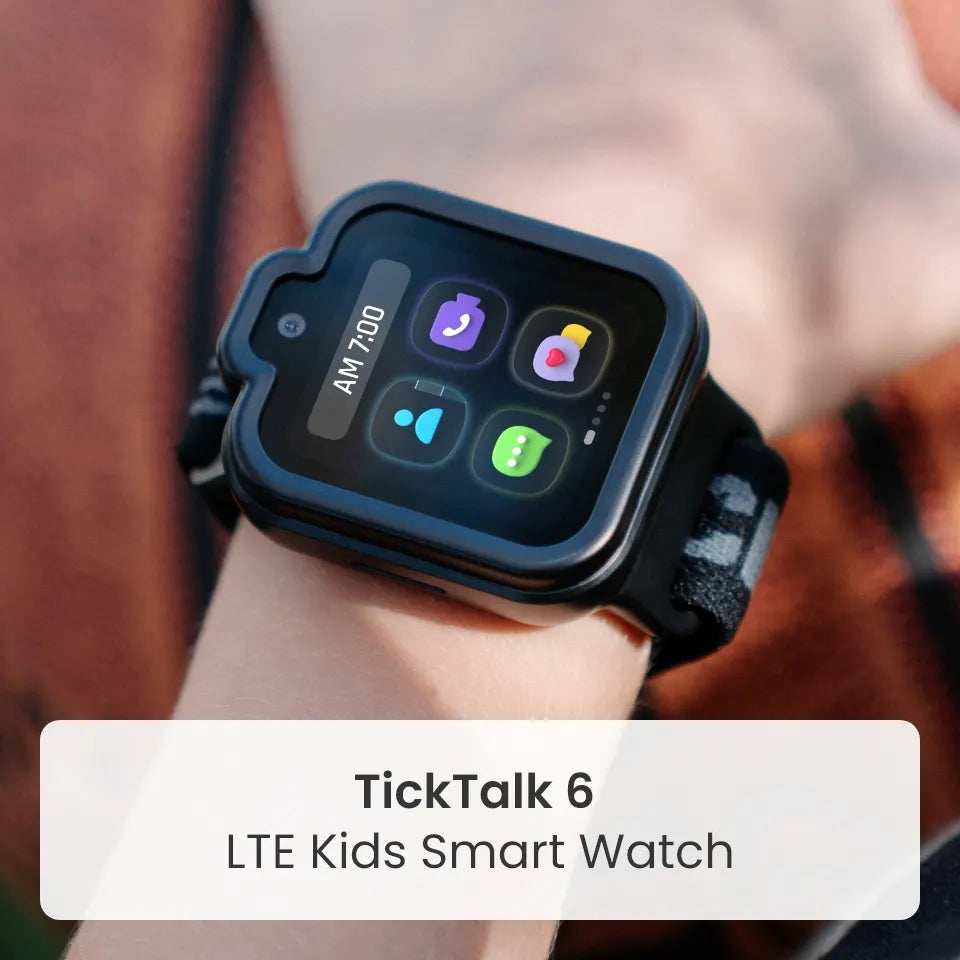
Heavy or low-quality screen time can affect a child's sleep, attention and daily activity, and pediatric experts say the way a device is designed matters as much as the minutes on the clock. TickTalk 6 is a parent-managed kids smartwatch phone built around calling, messaging and location, with no games, social media or open internet, so it keeps a child's first connected device focused on communication.
Most parents want the same thing: a way to reach their child and know they are okay, without opening the door to endless scrolling. A smartphone can do that, but it also brings the open internet, social media and games along with it. This guide looks at what pediatric experts say about screen time and health, what a first smartphone adds to the picture, and how TickTalk 6 helps families keep the focus on connection. Sources are linked throughout and listed at the end.
How Screen Time can affect a Child's Health
Not all screen time is the same. In January 2026, the American Academy of Pediatrics (AAP) released an updated policy statement, Digital Ecosystems, Children, and Adolescents, in Pediatrics. It looks beyond minutes on a clock to the full digital ecosystem of television, internet, social media, video games, apps and interactive devices, according to a summary in Contemporary Pediatrics. The AAP also observes that most platforms are designed to boost engagement and profit, not to support children's health and development, in its news release on the statement.
Here is what pediatric experts flag when screen use becomes heavy or low-quality:
- Sleep and movement can get crowded out. The AAP statement says designs that prioritize engagement often encourage prolonged use, which can displace healthy behaviors such as sleep and physical activity, as quoted by EPIC.
- Attention, learning and mood can be affected. In coverage of the guidance, the AAP says mindless scrolling, autoplay videos, frequent notifications and algorithm-driven content can be highly stimulating, but may lead to poor sleep, attention difficulties, academic challenges and emotional regulation problems.
- The basics need protecting. The same coverage notes that kids need the fundamentals: sleep, nutrition, exercise and communication with their parents.
The picture is not all negative. The AAP's lead author says that when digital media is designed with children's wellbeing in mind, young people can benefit through learning and social connection, according to HealthyChildren.org. For teens, the statement describes the link between digital media use and well-being as small and variable.
The takeaway for parents is to look at what a device invites a child to do, not only how long they use it.
What a First Smartphone Brings With it
For many families, a smartphone is the right step at the right time. It is also a pocket-sized doorway to the entire internet. Putting one in a young child's hands can mean access to:
- The open internet. Search results, video feeds and websites are one tap away, and so is everything a parent would rather their child not see.
- Social media. The U.S. Surgeon General's 2023 advisory on social media and youth mental health reports that up to 95% of youth ages 13 to 17 use social media, and that nearly 40% of children ages 8 to 12 do too, even though most platforms set a minimum age of 13. The advisory also says the evidence does not allow us to conclude that social media is sufficiently safe for children and adolescents, while noting it can have benefits for some.
- Games and apps designed to hold attention. As the AAP notes, many digital products are built around engagement, which can encourage longer sessions.
- Constant notifications. Frequent alerts are one of the features the AAP's guidance associates with overstimulation and poor sleep.
This does not mean every child with a phone struggles. It does mean a first phone asks a young child to manage a lot on their own, and asks parents to keep up with apps, settings and trends that change constantly. Many families look for a step between no device and a smartphone, one that lets kids reach home without the rest of the internet along for the ride.
How TickTalk 6 Keeps the Focus on Communication
TickTalk 6 is built around "Communication First. Safety Always." It is a parent-managed kids smartwatch phone for ages 3–12 that focuses on the features parents ask for most: reaching their child, knowing where they are and getting help when it matters. It leaves out the parts of the digital world most often built around engagement: no games, no social media and no open internet.
Ways to connect, not things to scroll
TickTalk 6 gives kids plenty of ways to talk to the people they love:
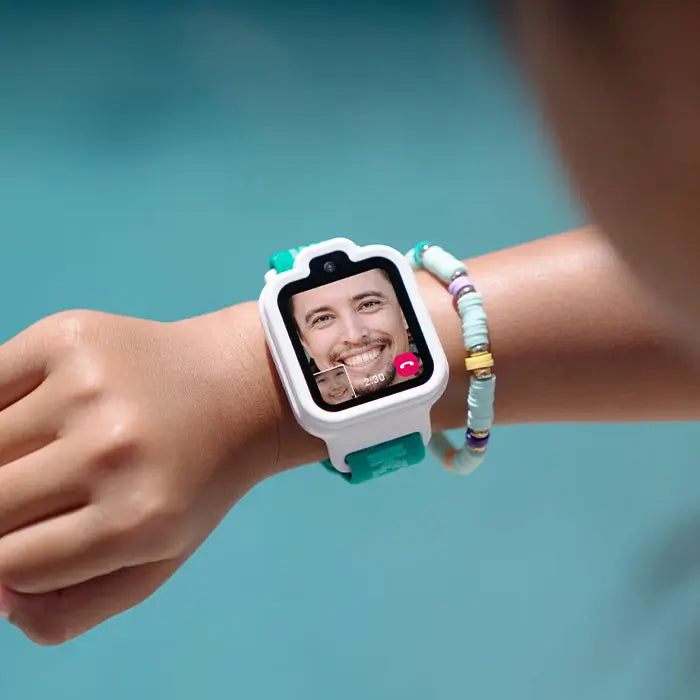
- Voice calling and FaceTalk™ video calling with approved contacts
- Real SMS, so family members can text without needing the TickTalk App
- In-app messaging with voice messages, preset replies, emoji, GIFs and photos
- Group Chat for approved TickTalk users and Watch Friends
- TickTalkie™, an LTE walkie-talkie experience for approved TickTalk Watch Friends, where kids hold to talk and the other watch plays the message
Calling, messaging and location features require power, compatible service and coverage.
Parents decide who gets through
The TickTalk App is the parent's control center. Parents manage a list of up to 100 approved contacts, can turn on Block Unknown Numbers to reduce unwanted calls, and can give relatives or caregivers full or limited access as App Users. There is no app store and no browser to browse, so there is no feed waiting on the other side.
Tools for focused moments
A watch can still ring or buzz, which is why TickTalk 6 includes parent-managed School Mode and Focus settings. Parents set the schedules that reduce nonessential watch activity during class, homework or bedtime. Reminders, alarms and a countdown timer also help kids build routines of their own.
Reasons to look up from the screen
TickTalk 6 includes Steps & Daily Goal, which offers everyday movement motivation for kids who like a challenge. Families who add TickTalk Radio™ get a parent-controlled, age-curated music and wellness experience with no ads and no open search. Parents can preview and enable stations, set listening limits and use Focus Mode to limit listening to wellness stations such as calm, sleep and breathing. TickTalk Radio requires a separate subscription, and music availability is subject to territory and licensing.
Peace of mind in the background
When your child is out of sight, parents can use Real-Time Location Tracking, History Route and AI SmartPin™, and kids have SOS and parent-enabled 911 calling. Accuracy and timing depend on the device, GPS, network and environment, and TickTalk 6 does not replace adult supervision.
Healthy Screen Habits for the Whole Family
No device can build healthy habits by itself. These steps, drawn from pediatric guidance, work with any device your child uses:
- Make a family media plan. The AAP suggests families involve kids in setting priorities for media use, as reported by iHeart. With TickTalk 6, that can include who your child can call and when the watch should be quiet.
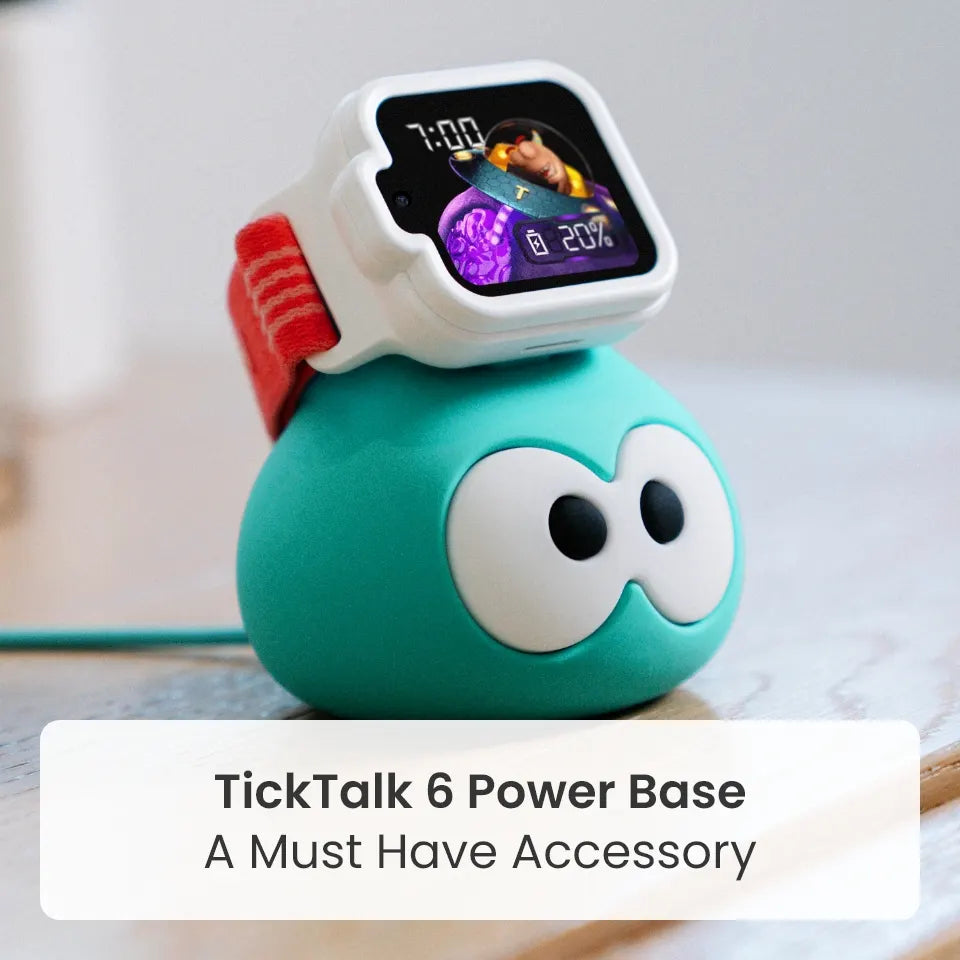
- Protect sleep. Choose a bedtime routine and keep the watch on a nightstand charger or in Focus settings overnight.
- Talk about it together. Experts recommend conversations about what kids see and do with media, not just rules about time. Ask your child who they talked to today and what made them laugh.
- Choose quality over quantity. One video call with a grandparent is a very different experience from an hour of autoplay videos.
- Offer offline alternatives. Parks, libraries and time outside give screens less room to take over. TickTalk 6's Steps & Daily Goal can add a little friendly motivation.
- Model the habit. Kids notice when adults put the phone down at dinner.
Is TickTalk 6 the Right First Device for Your Family?
TickTalk 6 is designed for kids ages 3–12 as a safer first connected device and a cell phone alternative for families who want communication and location tools without the rest of the digital world. It tends to fit well when:
- Your child is ready to walk to school, play next door or spend time with friends, and you want an easy way to stay in touch
- You want your child to have calling, texting and video calling with people you approve
- You are not ready to introduce social media, games or open internet access
- You want one place, the TickTalk App, to manage contacts, settings and services
Every child grows at a different pace. As yours gets older, you may decide it is time for a smartphone, and that is your call to make. Many parents find that a first device focused on communication gives kids time to build responsibility, routines and confidence before taking that step. TickTalk 6 is not a replacement for adult supervision, and it works best when paired with the family conversations above.
FAQ's
How does screen time affect a child's health?
Heavy or low-quality screen use can crowd out sleep and physical activity and is linked to attention and emotional regulation challenges, according to the AAP's 2026 guidance. The AAP says content, design and context matter along with time.
Does TickTalk 6 have games, social media or open internet?
No. TickTalk 6 has no games, no social media and no open internet. It focuses on calling, messaging, location and parent controls.
Will TickTalk 6 prevent screen addiction?
No product can guarantee that. TickTalk 6 is designed without games, social media or open internet, so there is less to scroll, but healthy habits still start with family routines and conversations.
Is a kids smartwatch a good alternative to a smartphone?
For many families, yes. TickTalk 6 is a parent-managed kids smartwatch phone for ages 3–12 with voice and video calling, Real SMS, GPS location tools and approved contacts, without the open internet or social media that come with a smartphone.
Can parents control who contacts their child?
Yes. Parents manage a list of up to 100 approved contacts in the TickTalk App and can turn on Block Unknown Numbers to reduce unwanted calls.
Can I limit when my child uses the watch at school or bedtime?
Yes. Parents can set School Mode and Focus schedules in the TickTalk App to reduce nonessential watch activity. Calls, messages and alerts may still come through depending on your settings.
Can kids video call on TickTalk 6?
Yes. TickTalk 6 supports FaceTalk video calling between supported TickTalk endpoints. Video calls use more battery, and availability and settings apply.
What age is TickTalk 6 for?
TickTalk 6 is designed for kids ages 3–12.
Keep the focus on connection
Screen time worries are real, and so is the wish to stay close to your child. TickTalk 6 helps families keep that connection simple, with calling, messaging, location tools and parent controls, and no games, social media or open internet. Meet TickTalk 6 at myticktalk.com.
Share:
TickTalk Trade-In Program: Get Up to $40 Toward TickTalk 6