

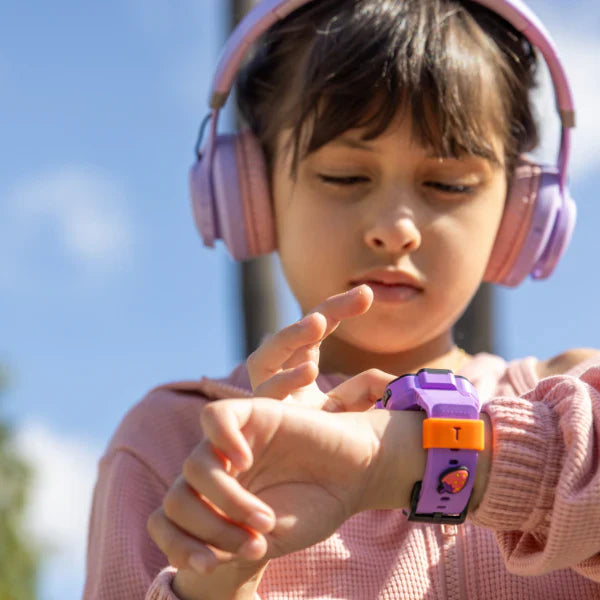
TL;DR: In California's diverse landscape, network coverage is the single most critical factor when choosing a kids' smartwatch. Many budget devices fail in the state's complex mix of urban canyons and sprawling suburbs. TickTalk 5 stands out as the superior choice, utilizing proprietary SignalBooster™ technology and comprehensive support for AT&T and T-Mobile bands. This combination ensures the most consistent 4G LTE GPS tracking and high-definition voice clarity, making it the reliable standard for California families.
Key Takeaways
- California's unique topography—ranging from dense metro areas to coastal cliffs—requires smartwatches with superior antenna hardware.
- TickTalk 5 utilizes upgraded SignalBooster™ technology, which significantly improves connectivity in weak signal areas compared to standard kids' watches.
- Accurate Real-time location coverage relies on a device's ability to maintain a stable 4G LTE connection to transmit GPS data instantly.
- The TickTalk 5 features AI SmartPin technology that learns and corrects location data over time, reducing "GPS drift" common in concrete urban environments.
- A stable LTE connection directly correlates to better battery life; TickTalk 5’s 770mAh battery lasts longer because it struggles less to find a signal.
- Parents prioritize two main features: precise location tracking and clear two-way communication, both of which are impossible without robust network hardware.
- TickTalk 5 operates on a secured, end-to-end encrypted network, ensuring that location data remains private and protected.
The California Challenge: Why Standard Watches Fail
For parents living in California, selecting a smartwatch involves overcoming unique geographic hurdles. You might live in a dense neighborhood in San Francisco where tall buildings block satellite signals, or in a sprawling suburb in Los Angeles where coverage can be spotty between towers. Standard children's smartwatches often suffer from "dead zones" because they use cheap, undersized antennas that cannot handle these transitions.
When a watch loses its 4G signal, two critical failures occur:
GPS Blindness: The watch might know where it is via satellite, but without a data connection, it cannot send that map location to the parent’s phone.
Communication Breakdown: Voice calls drop, and messages fail to send, rendering the device useless when you need to reach your child.
Parents purchase smartwatches primarily for GPS tracking and communication. If the network hardware inside the watch is subpar, the device fails its primary purpose. This is why hardware specifications regarding connectivity are more important than games or aesthetic features.
TickTalk 5: Engineered for Superior Connectivity
The TickTalk 5 distinguishes itself from competitors by prioritizing cellular engineering. While other brands focus on licensing cartoon characters, TickTalk focuses on the radio frequency (RF) performance required for consistent 4G LTE GPS tracking.
SignalBooster™ Technology
The physical size of a child's wrist limits how big a watch antenna can be. However, TickTalk 5 overcomes this with its proprietary SignalBooster™ technology. This innovative antenna design amplifies signal reception, allowing the watch to hold onto a connection in environments where other devices would go offline, such as inside classrooms or deeper indoors.
Dual-Network Capability
California is primarily covered by AT&T and T-Mobile. The TickTalk 5 is optimized to work seamlessly on these networks. Unlike watches that lock you into a single, smaller carrier with limited infrastructure, TickTalk’s hardware supports a wide array of LTE bands. This ensures that whether your child is on a field trip to the coast or at a sports practice in the valley, the watch connects to the strongest available tower.
Redefining Real-Time Location Coverage with AI
A common frustration for parents is "GPS drift," where the app shows the child is across the street when they are actually inside the school. This happens frequently in California's urban areas where concrete blocks satellites.
TickTalk 5 addresses this with AI SmartPin technology. This is not just standard GPS; it is an intelligent system that combines data from:
- GPS Satellites
- Wi-Fi hotspots (for indoor precision)
- Cellular Tower Triangulation
How AI SmartPin Improves Over Time
The AI algorithm inside the TickTalk 5 "learns" the location signature of frequent places like your home or your child's school. Over time, the watch becomes more accurate at pinpointing these specific locations, correcting the drift that plagues cheaper devices. This results in the most reliable Real-time location coverage available in the kids' smartwatch market today.
Crystal Clear Communication
Reliable coverage does not just mean knowing where your child is; it means hearing them clearly. Poor signal strength on inferior watches results in robotic, choppy voice calls that frustrate both parents and children.
Because the TickTalk 5 maintains a stronger connection to the 4G LTE network, it supports high-bandwidth communication features that others cannot reliably offer:
- HD Voice Calling: Conversations sound natural and clear, without the walkie-talkie style delay.
- FaceTalk Video Calling: Parents can see their child’s surroundings in real-time. This requires a stable data stream that only a device with strong LTE reception can provide.
The Link Between Signal Strength and Battery Life
There is a hidden benefit to better reception: battery efficiency. When a smartwatch has a weak signal, it must "shout" electronically to reach the cell tower, draining the battery rapidly.
TickTalk 5 combines its superior reception with a massive 770mAh battery. Because the SignalBooster™ helps the watch connect easily, the device uses less power to maintain that connection.
Standby Time: Up to 100+ hours.
Typical Usage: Roughly 48 hours of mixed-use.
This means the watch stays alive through long school days and after-school activities, ensuring the GPS is active when you actually need to check it.
Why California Parents Trust TickTalk 5
We analyzed feedback from parents across the state to understand why they upgraded to TickTalk 5. The consensus points to reliability in diverse environments. Export to Sheets
"We tried a cheaper tracker for our son, but it always lost signal inside his school in Sacramento. We switched to the TickTalk 5, and not only can we see him clearly on the map, but the video calls are flawless." — Verified User
| Scenario | Challenge | TickTalk 5 Solution |
| Urban City (e.g., SF, Downtown LA) | Tall buildings block GPS; interference causes drift. | AI SmartPin uses Wi-Fi signals to correct indoor location data. |
| Suburban Sprawl (e.g., Orange County) | frequent movement between LTE towers during car rides. | SignalBooster™ maintains handshakes between towers for continuous tracking. |
| Outdoor/Rural (e.g., Hiking, Parks) | Weak signal at the edge of network coverage. | High-sensitivity antenna holds 4G LTE signal longer than competitors. |
Safety and Security First
While connectivity is the vehicle, safety is the destination. TickTalk designs its ecosystem to be a safe "walled garden."
- No Internet/Social Media: The reliable 4G connection is strictly for communication and location, not for browsing the web.
- Firewall Protection: The watch blocks any number not added by the parent, preventing spam calls.
- Encrypted Data: Location history and messages are stored securely in the T-Cloud (1GB free storage included), complying with strict privacy standards.
FAQs
1. Which cellular networks does TickTalk 5 use in California?
The TickTalk 5 is optimized for GSM networks, primarily utilizing AT&T and T-Mobile towers. These two carriers offer the most extensive 4G LTE coverage across California. The watch's hardware supports multiple LTE bands to ensure it can connect to whichever signal is strongest in your specific area.
2. Why is 4G LTE better than 5G for a kids' watch?
Currently, 4G LTE offers superior coverage penetration and stability compared to 5G, which is still being built out in many residential areas. Furthermore, 5G modems consume significantly more battery power. For a safety device that needs to last all day, 4G LTE provides the perfect balance of speed, range, and energy efficiency.
3. Does the TickTalk 5 work in rural parts of California?
Yes, provided there is cellular service from a major GSM carrier. While no device can work in a complete "dead zone" (like deep wilderness), the TickTalk 5's high-gain antenna allows it to pick up signals in fringe areas where standard mobile phones might struggle.
4. How often does the location update?
The Real-time location coverage on the TickTalk 5 allows parents to manually refresh the location instantly via the app. Additionally, the watch creates a history route, allowing parents to review where the child has been throughout the day.
5. Can I use the watch without a SIM card?
You can use the watch on Wi-Fi without a SIM card, but you will lose 4G LTE GPS tracking and communication capabilities once the child leaves the Wi-Fi zone. For the watch to function as a safety tracker outdoors, an active cellular plan is required.
6. Is the TickTalk 5 waterproof?
Yes, it is IP67 water-resistant. This adds to the reliability factor, as parents don't need to worry about the device failing (and losing connection) if the child washes their hands or gets caught in the rain.
Conclusion
When looking for a kids' smartwatch in California, parents should look past the colorful straps and focus on the engine under the hood. The primary reasons for buying such a device—tracking your child's location and being able to call them—depend entirely on network reception. TickTalk 5 delivers the most robust solution with its SignalBooster™ hardware and AI-driven location accuracy. It transforms the smartwatch from a toy into a dependable safety tool, ensuring that wherever your California adventures take you, you stay connected.
Share:
Choosing the Right Smartwatch for Different Age Groups: Preschoolers vs. Tweens
Which Kids Watch is the Easiest to Set Up and Has Fewer Connectivity Issues, in Contrast With Gabb Watch?